
Artificial Intelligence (AI) is transforming the medical device industry, offering unprecedented opportunities to improve patient outcomes, accelerate time-to-market, and reduce development costs. From early-stage concept design to FDA 510(k) submissions, AI-assisted workflows are redefining how engineers, clinicians, and regulatory professionals approach product innovation.
In this blog, we explore the cutting-edge ways AI is being integrated into medical device development — and why now is the time for companies to embrace AI to remain competitive and compliant.
AI in Medical Device Design and Engineering
Medical device design begins with solving a clinical problem — and AI is proving to be a powerful ally in that process. Today’s AI tools can analyze massive datasets from electronic health records (EHRs), clinical trial outcomes, and market trends to help define unmet needs and user requirements more precisely.

AI-assisted design platforms now support:
- Generative Design: AI models can rapidly generate multiple design concepts that meet clinical specifications, materials constraints, and ergonomic needs.
- Predictive Simulation: Using AI-driven simulations, teams can evaluate stress loads, fluid dynamics, and electromagnetic fields early in the design process without needing to build multiple physical prototypes.
- Smart CAD Integration: AI-powered plugins to CAD tools can auto-suggest geometry fixes, optimize components for 3D printing, and flag regulatory non-conformance risks before human review.
These capabilities streamline design iteration cycles and enable better decision-making from the start.
AI in Product Development and Testing
As devices move through development, AI tools assist in everything from prototyping to quality assurance:
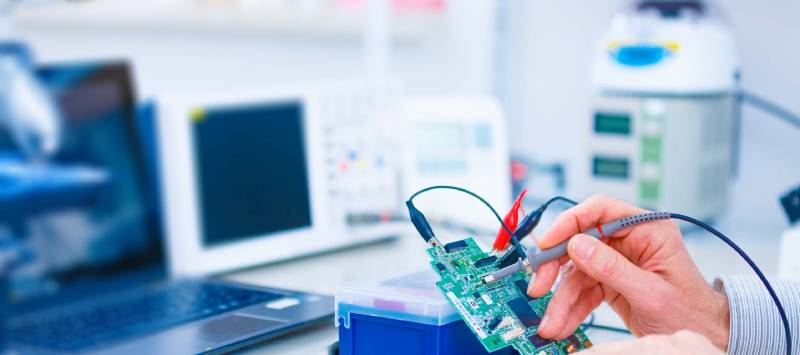
- AI-Assisted Testing: Machine learning algorithms can automate test protocol generation based on risk analysis, historical performance, and regulatory standards. This improves test coverage and reduces human error.
- Digital Twin Modeling: AI-powered digital twins simulate how devices behave under real-world conditions across diverse patient populations, leading to safer and more inclusive products.
- Intelligent Failure Mode Analysis: AI can identify root causes of test failures faster than traditional statistical methods by analyzing complex variable interactions in materials, software, and mechanical systems.
For software-enabled devices, AI helps generate more robust code through AI-driven code synthesis, static code analysis, and unit test automation — essential for Class II and III devices.
AI in 510(k) Submissions and Regulatory Strategy
- Preparing a successful FDA 510(k) submission can be labor-intensive and expensive. AI is now being used to:
- Match Predicate Devices: Natural language processing (NLP) tools compare thousands of 510(k) summaries to identify the best-fit predicate, significantly reducing research time. Keep in mind, human oversight is required throughout.
- Automate Documentation: AI can auto-generate sections of the submission — such as device description, risk analysis summaries, and labeling — from product specs and design history files. Keep in mind that all AI-generated documentation must be reviewed, approved, and validated by qualified regulatory personnel.
- Regulatory Intelligence: AI systems monitor FDA databases for guidance updates, recent rejections, and trends, helping teams tailor their submissions to current expectations.
In pilot programs, AI-assisted regulatory submissions have shown to reduce preparation time by up to 40%, with higher first-pass success rates. On January 6, 2025, the FDA posted draft guidance as a roadmap for next-generation AI-driven medical innovation.
Cost Savings and Better Products Through AI
AI doesn’t just make development faster — it makes it smarter and more cost-efficient; provided it is validated and used within a compliant quality system.
Here’s how:
1. Reduced Prototype Costs
Generative design and simulation reduce reliance on physical prototypes, saving tens of thousands of dollars in materials and testing labor.
2. Shorter Development Cycles
AI accelerates design iteration, testing, and documentation, allowing products to reach market months faster — a key advantage in competitive or urgent therapeutic areas.
3. Improved Product Quality
Predictive analytics identify issues earlier, improving safety, usability, and performance — while minimizing post-market failures and recalls.
4. Lean Regulatory Workflows
AI automates much of the document-heavy regulatory process, reducing the need for redundant manual reviews and expensive consultants.
5. Scalable Innovation
For startups and small firms, AI levels the playing field by providing enterprise-grade design, testing, and regulatory tools at a fraction of the traditional cost.
Final Thoughts
AI is not replacing engineers, designers, or regulatory professionals — it’s augmenting their expertise. By harnessing AI for medical device design, development, testing, and submission, companies can deliver safer, smarter, and more accessible products with fewer delays and lower costs.
Also, any AI system used to support design, testing or submission must be validated for its intended use, per FDA QSR requirements.
The future of MedTech innovation is here — and it’s intelligent.
Want to explore how AI can supercharge your medical device development process? Contact our expert team at Bytes, Inc for a free consultation.